
Post Summary: No Reply to the Notice Means We Call You
A client’s payment failed recently. Our notice got no reply, so we phoned him. Voicemail, which was out of character. Then a day of nothing, then several more days of quiet.
By then the question wasn’t the invoice. It was whether something had happened to him. He surfaced a few days in, told us what was going on, and the payment got sorted the same conversation.
His trade runs in cycles. Money owed to him hadn’t arrived, so money he owed others sat unpaid, and being behind with people counting on you weighs more than the number does. He was buried, hated leaving anyone hanging, and had nothing left to answer with.
The line is easy to state. Stay in touch and we’ll work around it. Disappear for two weeks and the site does come down. A declined card or a thin month is ordinary, and once a notice goes ignored the next move is checking on the person.
Where the Fear of Losing Your Site Comes From
The card doesn’t go through. The notification hits. And somewhere on the other end, a business owner who’s already stretched thin feels the knot tighten, are they going to shut my site off?
That panic doesn’t come from nowhere. It comes from experience, from every vendor relationship where a missed payment turned into a confrontation instead of a conversation.
Here’s what should happen instead.
When the Email Got No Answer, We Called
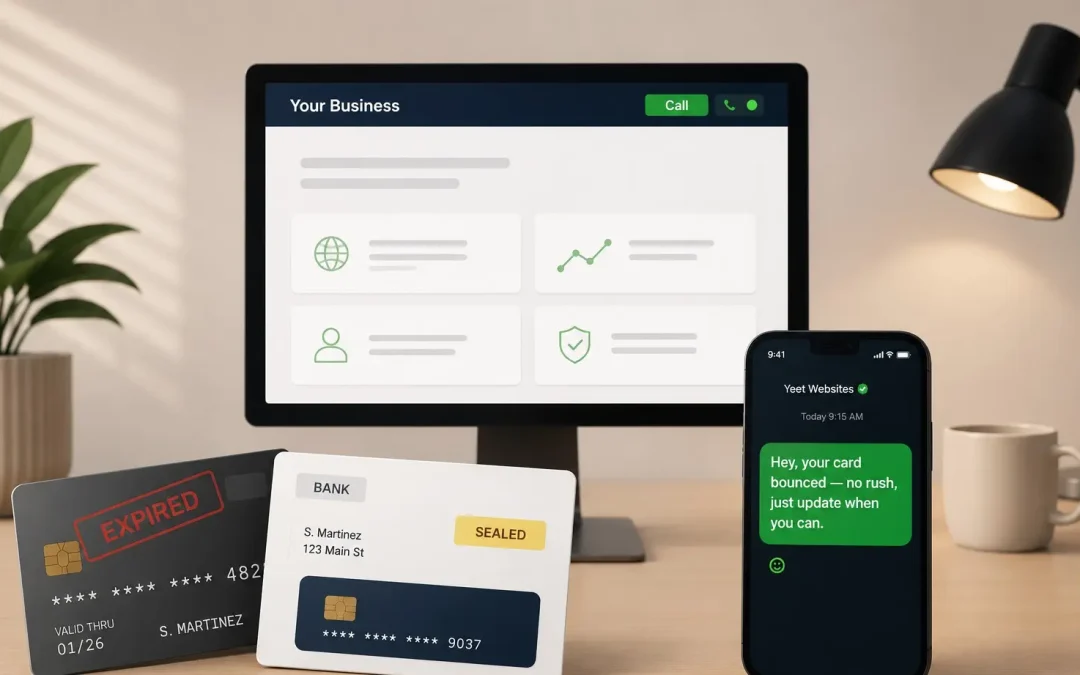
The most recent time a client’s card didn’t go through, the email went out and nothing came back. So we didn’t leave it there. We picked up the phone. The nice thing about having a personal relationship with our clients is that we can make those kind of judgment calls. If it’s someone that we work very closely with, leaving it at an email would almost be weird, if that makes sense.
So we called. Went into voicemail, which was unusual for this guy. About a day goes by. No response. Task pops up to check on it. Shoot an email. Couple days go by. No response.
Very unusual for this guy.
Of course the first thought isn’t about the invoice. It’s what’s going on? Is he okay? Then finally, day three or four, he gets back and explains what happened. We work out the payment. He’s all good to go. And he appreciated the way we handled it, because he was just super slammed and hates doing that to people but just could not get back to us.
And it happens. Right?
Why the Client Had Gone Quiet
This client is in a service business. Cyclical. Receivables weren’t coming in, and he had all kinds of people he owed during that time period. That’s a very stressful thing, not just the money, but the weight of knowing you’re behind with people who are counting on you.
He’d had the other kind of experience before. The awkwardness where you’re already embarrassed about being late and then the response makes it worse. Makes you not want to pick up the phone at all.
When you’re already wondering whether the slow months are going to break everything, the last thing that helps is a cash-flow hiccup turning into a crisis. Working with us was a sense of relief. That’s what he said. Not gratitude for a favor, relief that it wasn’t a fight.
How Late Is Too Late Before the Site Comes Down
What we do is make sure that everything’s okay. That’s the first move. Not the invoice. Not the payment portal. The person.
And we’re honest about the boundary: if it’s been a couple of weeks and there’s no contact, then the site’s going to go down. But that’s the main thing, communication with us. You got to communicate. That’s all we ask. If you’re talking to us, we’re working with you. If you go silent for weeks, that’s a different situation. But a bounced card, a late month, a rough stretch? That’s life. We know what happens when a subscription payment doesn’t go through, and when the email goes unanswered, the next step is a phone call, not a countdown.
Yeetish Question
What if I know my payment is going to be late, should I reach out first?
If you can, yes. But if you can’t, the email goes out first and then we’re going to call you. The clients who reach out first appreciate that they can. The ones who don’t get the same response, a phone call. Either way, we’re talking to you like a person.