
Post Summary: You Can Add a Store Later, Depending on What You Sell
A t-shirt seller hired us to put his designs in front of people. Strong photos, simple layout, nothing to check out with. Half a year on, the shirts were drawing attention and buyers had nowhere to go.
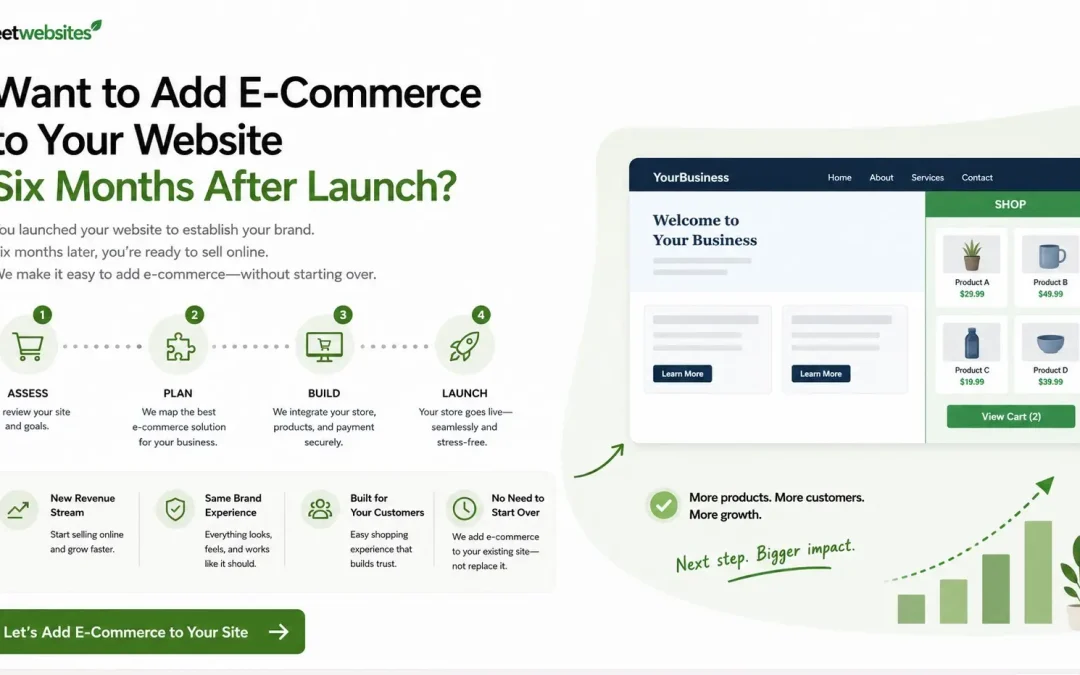
Fixing that took one discussion. A cart went onto what was already live. Nothing got torn down and nothing started over.
It sold a bit, looked sharp, and came down inside a year. Disappointing for everybody. The technical side did its job. The business idea behind it was the part that didn’t hold.
His closing comment is the one we remember. No regrets, and not because of revenue. He’d have spent years wondering about that store otherwise, and the question is answered now. Most owners never get that far with the idea they keep meaning to test.
He Didn’t Want a Store. Then He Did.
He sold t-shirts. That was the whole thing, the designs, the brand, the vibe. When he came to us, all he wanted was a site that showed off the work. Good imagery. Clean layout. No store.
Six months later, he changed his mind.
“I need a store now.”
People change their mind. That’s not a problem. That’s not a surprise. That’s a Tuesday. A business owner launches a site with one vision and six months in, the vision shifts. What matters is what happens when it does.
Adding the Cart, and What Came After
He came back and said he wanted to sell online but he never mentioned this kind of business pivot was possible until this moment. The t-shirts were getting attention, people were asking where to buy them, and he wanted a cart on the site.
That was the whole conversation.
Not a rebuild. Not a new contract. Not a “well, we’d have to start from scratch.” He asked. We talked about it. The store got added to the site he already had.
It didn’t work out the way he hoped. The store looked great, got some sales, but it didn’t last, less than a year before he pulled it down. That part stung. He was bummed. We were bummed. Everyone was bummed about it.
But he wasn’t mad at us.
And that matters more than people think. The thing he needed six months after launch wasn’t part of the original plan, and adding it wasn’t the problem. The store worked. The addition worked. The business question behind it was harder than the website question, and that’s a different story entirely.
Why He Doesn’t Regret the Store
At the end of it, he said something that stuck with us. He was glad he did it. Not because it made money, it didn’t. But because otherwise he would have been sitting there for years asking himself, what if I would have ever done that t-shirt store?
Now he knows.
That didn’t work. And knowing that, having the answer instead of the question, at least that’s not negative. That’s a guy who tried the thing, found out the thing, and moved on without the weight of wondering.
A lot of business owners carry that weight. The idea they never tested. The feature they never added. The version of the site they talked about but never built. It sits in the back of their head and it doesn’t go away on its own.
He doesn’t have that. He tried it. He knows.
And when your website can handle the changes your business throws at it after launch, trying the thing doesn’t mean burning the whole site down to find out.
Yeetish Questions
Should I plan for e-commerce from the start even if I don’t need it yet?
Not necessarily. Plans shift, and that’s fine. If you don’t need a store on day one, don’t pay for one on day one. Build what you need now. If the business shifts six months in and you want something that wasn’t on the table at the start, that conversation should be simple, not painful.
Is adding a store to my existing site always the right move?
No. It depends on what you’re selling. A handful of products with simple options fits onto a site you already have. Hundreds of items with size and color variants, inventory syncing across channels, subscriptions, or complex shipping rules are a different kind of build, and that’s a conversation worth having before anyone adds a cart. Ask what you’re going to be selling in two years, not just what you’re selling now.