
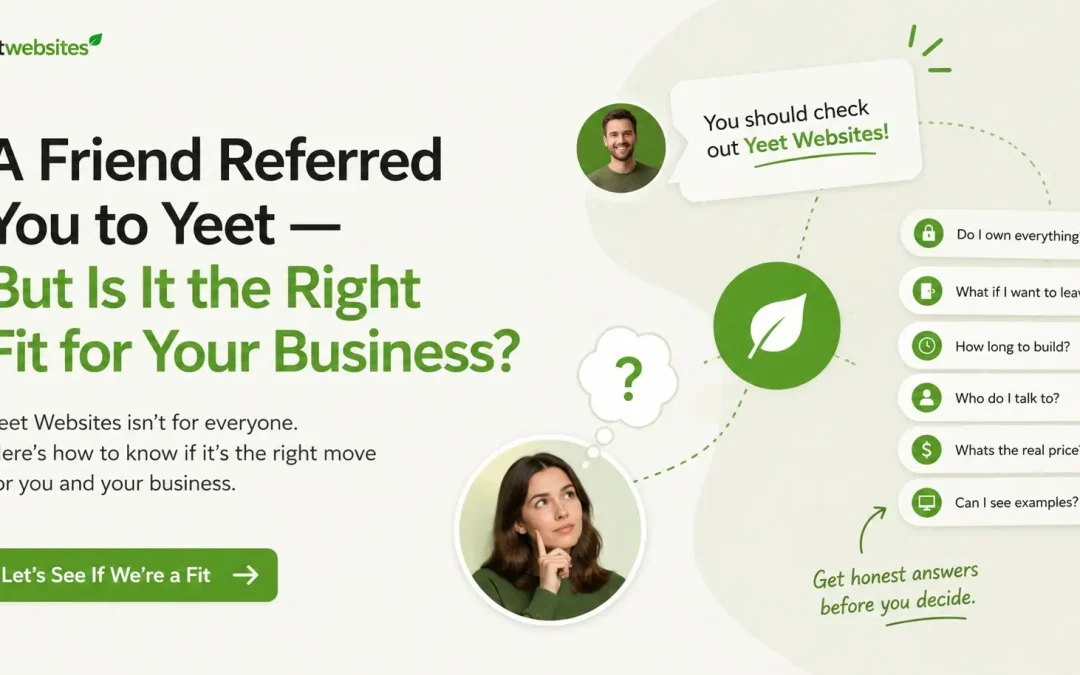
Post Summary: The Referral Earns the First Conversation, Not the Decision
The friend who told you to call us had a good experience, and that experience is theirs. You don’t have the same business, the same needs, or the same questions, and you might not even want to work with a boutique web designer at all.
You can hear the moment it changes. A referred prospect walks in quoting their friend, saying we were great and the process was easy. Then at some point the friend’s words stop and the prospect’s words start. How long does this take? What’s your feeling on that kind of thing? Those aren’t borrowed questions.
An auto shop came to us on a referral, one of those dent specialists who also does other work. What was important to them surprised us. They didn’t have a logo. They knew we could do the website, that part was obvious, but they didn’t know about branding, and that was the thing that mattered most.
So we spent a good couple of weeks getting the logo right. Didn’t start the website, didn’t start billing, none of it, until that was solved first. If we’d shown up with a pitch about website features instead of asking what mattered, we’d have missed the whole thing. The fit either works or it doesn’t, and we’d rather find out together than have you take someone else’s word for it.
What a Referral Gets You, and What It Doesn’t
Someone you trust told you to call us. That means something, not because of what it says about us, but because of what it says about the person who sent you. They had a good experience, and they thought you might too.
But their experience is theirs. You’re not them. You don’t have the same business, the same needs, or the same questions. You might not even want to work with a boutique web designer. The referral got you to the phone. What happens next has to be yours.
The Dent Specialist Who Needed Something We Didn’t Expect
An auto shop came to us on a referral, one of those dent specialists who also does other work. Warm from the start. They trusted the person who sent them, and that trust carried into the conversation. But they hadn’t built their own reason yet.
That’s the difference between a referral and a cold call. There’s already that first layer of trust built in because we’ve already done a great job for someone they know. So the conversation shifts. It’s not about proving that we’re legit anymore, it’s about validating what’s important to them.
And what was important to them surprised us. They didn’t have a logo. They wanted something awesome. They knew we could do the website, that was obvious. But they didn’t know about branding, and that was the thing that mattered most. They wanted a specific thing done, and everything else would flow from that.
So that’s what we did. We spent a good couple of weeks getting the logo right. Didn’t start the website, didn’t start billing, none of it, until that was solved first. Because that had to come first for them. And that made a lot of sense.
If we’d shown up with a pitch about website features instead of asking what mattered, we’d have missed the whole thing.
When the Questions Change
You can hear it when it happens. A referred prospect walks in quoting their friend, “they said you were great, they said the process was easy.” And then at some point, the friend’s words stop and the prospect’s words start. Best part about a referral is the untruths aren’t as frequent as on a cold call, we get to the meat of the conversation quicker.
“How long does this take?” “What’s your feeling on that kind of thing?”
Those aren’t borrowed questions. Those are the questions that are leading up to us working together, which is really exciting. And that shift, from relaying someone else’s experience to building your own, is the whole point of the first conversation.
It’s all about them, not us. If you don’t ask the questions and figure out what makes that referral unique and different, then why would they trust you? The friend’s word gets you in the room. What you do with their specific situation is what keeps you there.
We don’t need you to show up convinced. We need you to show up with your own questions, even if they’re different from the ones your friend had. Especially then.
The fit either works or it doesn’t. We’d rather find out together than have you take someone else’s word for it.
Yeetish Question
Should I just sign up because my friend had a good experience?
No. Your friend’s experience proves we did good work for them. It doesn’t prove we’re right for you. The referral earns the first conversation, what matters is whether your questions get answered and your situation gets understood. If that happens, you’ll have your own reason. If it doesn’t, no referral should change that.